
If you want the short answer, the best crossbow for beginners in Canada is one you can cock easily, carry all day and shoot well at 30 yards. For most new hunters, that means a light recurve in the 300 to 350 FPS range. You don’t need the fastest bow on the rack. You need one you’ll actually practise with.
I’ve watched a lot of first-time crossbow hunters buy too much bow. They pay for 400 FPS, then find it heavy in the stand and hard to cock after a cold sit. So this guide sticks to what matters in your first two or three seasons.
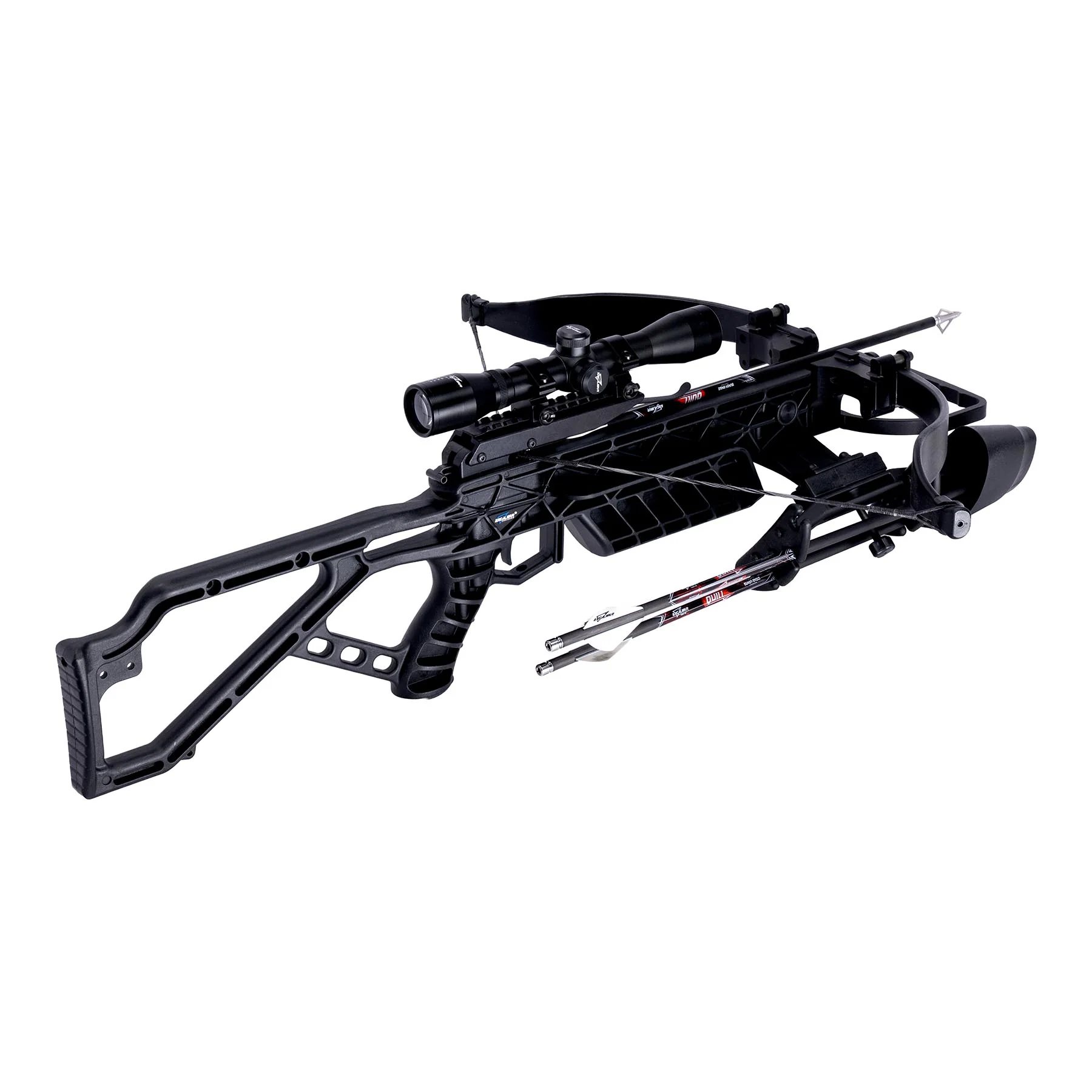
What makes the best crossbow for beginners in Canada
Speed sells crossbows, but it isn’t what makes a beginner successful. Shot placement does. A well-placed bolt at 305 FPS will take a whitetail cleanly. A rushed shot at 400 FPS won’t.
Here’s what I’d look at first:
- Weight. You’ll carry it to the blind, lift it into a treestand and hold it on target. Every pound shows up by late afternoon.
- Cocking. If you struggle to cock it, you’ll practise less. Also, you’ll dread re-cocking after a miss.
- Simple upkeep. Fewer moving parts means fewer things to fail at minus 15.
- Price you can live with. Leave room in the budget for bolts, broadheads, a target and a case.
Crossbow rules in Canada beginners should know
Buying a crossbow in Canada is simpler than buying a rifle. Under federal law, a regular two-handed crossbow doesn’t need a firearms licence. However, crossbows that can be aimed and fired with one hand, or that are 500 mm or shorter overall, are prohibited. The RCMP firearms licensing page explains the details.
Hunting is a different matter. Each province sets its own crossbow seasons, licence rules and gear requirements. Some provinces set minimums for draw weight or broadhead size, and new hunters usually need a hunter education course before they can buy a licence. So check your provincial hunting regulations before you pick a bow, not after.
Also check your local bylaws. Many towns treat crossbows like firearms when it comes to shooting inside town limits, even in your own backyard.
Best crossbow for beginners in Canada: three picks by budget
All three of these are recurves. I’ll explain why that matters for new shooters in the next section. Prices are in Canadian dollars.
Excalibur MAG Air: the easy starter at $650
The Excalibur MAG Air shoots 305 FPS and weighs just 4.9 lbs. It comes with a rope cocker, which cuts the effort roughly in half compared to cocking by hand. That light weight is the big win. It’s easy to hold steady, easy to carry and it fits youth and smaller-framed shooters well.
For deer, turkey and black bear at sensible ranges, 305 FPS is plenty. If most of your hunting is from a ground blind or a stand at 20 to 30 yards, this is the one I’d start with.
Excalibur Mag MAX: a step up at $900
The Excalibur Mag MAX pushes 350 FPS at 6 lbs. That extra speed flattens your trajectory a bit, so a small range error hurts you less. It’s still a manageable weight, and it gives a new hunter room to grow into longer practice distances.
Excalibur Suppressor CRT: buy once at $1,300
Some beginners would rather buy one bow and keep it for 15 years. If that’s you, look at the Excalibur Suppressor CRT. It shoots 370 FPS and weighs 6.2 lbs. It’s quieter at the shot, which helps when deer are close. It’s more bow than you strictly need, but you won’t outgrow it.
Want to compare every model side by side? Browse the full Excalibur crossbow lineup.
Why a recurve is easier for a first crossbow
Compound crossbows use cams and cables. They’re compact and fast, but there’s more to adjust and more to go wrong. Recurves are simpler. The limbs and string do the work, and that’s about it.
That simplicity pays off in a few ways. First, you can change a recurve string yourself with a basic stringer, so you don’t need a bow press or a trip to the shop. Second, there are no cams to go out of time. And when your hands are numb in late November, a simple bow is one less thing to worry about.
The trade-off is width. A recurve is wider across the limbs than most compounds. In a tight pop-up blind, practise your setup so the limbs clear the window frame.
Your first season: set-up and practice tips
Buying the bow is the easy part. Here’s how I’d spend the weeks before opening day.
- Sight in at 20 yards first. Then confirm 30 and 40. Don’t trust the scope’s yardage marks until you’ve shot them.
- Shoot from hunting positions. Sit on a stool, kneel and shoot off shooting sticks. Bench groups don’t tell you much about a real hunt.
- Practise in your hunting clothes. A bulky jacket changes how the stock sits on your shoulder.
- Set a range limit. For your first season, I’d keep shots at deer inside 40 yards. If you can’t keep every bolt in a paper plate at that distance, shorten it.
- Wax the string. A light coat every few weeks keeps it from fraying. Check the manual for your model.
One more tip: decide how you’ll uncock at the end of the day. Many hunters fire a practice bolt into a target or the dirt. Plan for it, because you shouldn’t walk out with a cocked bow.
If you have questions about setup or parts after you buy, our support page is a good place to start.
FAQ
Do beginners in Canada need a licence to buy a crossbow?
Not for a regular two-handed crossbow longer than 500 mm. But you still need a provincial hunting licence to hunt with one. Some retailers also set their own minimum age for buyers.
Is a 305 FPS crossbow fast enough for a beginner?
Yes, for deer and similar game at sensible ranges. Practice and shot placement matter far more than an extra 50 FPS. For bigger animals like moose or elk, many hunters move up in speed and bolt weight.
Should a beginner crossbow have a crank cocker?
It helps if you have shoulder trouble or a smaller frame. A rope cocker works fine for most people, though. If you want a crank, the Suppressor Extreme pairs 400 FPS with the Charger EXT crank.